Technology
Complete Guide to Fast Charging Technologies 2026
================================================================================
COMPLETE GUIDE TO FAST CHARGING TECHNOLOGIES 2026
================================================================================
Fast charging has revolutionized how we use smartphones. Gone are the days of leaving your phone plugged in overnight. Today, many phones can charge from 0 to 100% in under 30 minutes. This guide explains everything about fast charging technologies, compatibility, safety, and how to choose the right charger.
================================================================================
PART 1: FAST CHARGING STANDARDS EXPLAINED
================================================================================
Understanding the different fast charging technologies:
USB Power Delivery (USB PD):
Standard developed by USB Implementers Forum. Universal standard supported by many devices including iPhones, Google Pixels, Nintendo Switch, MacBooks, and many Android phones. Delivers up to 240W (USB PD 3.1). Uses USB-C to USB-C cables. Most future-proof technology. Charging speed: 18W, 20W, 27W, 30W, 45W, 65W, 100W, 140W, 240W.
Qualcomm Quick Charge (QC):
Developed by Qualcomm for Snapdragon processors. Version 5 delivers up to 100W. Backward compatible with older versions. Many Android phones support Quick Charge. Charging speed: QC 1.0 (10W), QC 2.0 (18W), QC 3.0 (18W optimized), QC 4+ (27W), QC 5 (100W+).
Samsung Super Fast Charging:
Samsung's implementation of USB PD PPS (Programmable Power Supply). Works best with Samsung phones. 25W (Super Fast Charging) and 45W (Super Fast Charging 2.0). Requires USB-C to USB-C cable with E-marker chip (5A rated). Charging speed: 25W (A series, S series base models), 45W (S Ultra series, Z Fold series).
Apple Fast Charging:
Uses USB PD standard. iPhone 12 and newer support 20W. iPhone 14 Pro and newer support 27W. iPhone 15 Pro and newer support 27W (USB-C). MagSafe wireless charging (15W) requires Apple certified charger. Charging speed: 20W (iPhone 12-15 base), 27W (Pro models), 15W (MagSafe wireless).
OnePlus Warp / SuperVOOC (OPPO):
Proprietary standard from OnePlus and OPPO. Very fast (65W, 80W, 100W, 150W, 240W). Requires proprietary charger and cable (red USB-A to USB-C on OnePlus). Not compatible with USB PD (charges slowly with other chargers). Battery split into two cells for faster charging without excess heat. Charging speed: 65W (0-100% in 30-35 min), 100W (0-100% in 25 min), 150W (0-100% in 15 min), 240W (0-100% in 10 min).
Xiaomi HyperCharge:
Proprietary standard from Xiaomi. 120W, 200W, 210W, 300W (concept). Uses dual-cell battery design. Requires proprietary charger and cable (USB-A to USB-C). Some compatibility with USB PD (18W-27W). Charging speed: 67W (0-100% in 40-45 min), 120W (0-100% in 18-20 min), 200W+ (0-100% in 8-10 min).
Huawei SuperCharge:
Proprietary standard from Huawei. Up to 100W. Uses proprietary charger and cable. Limited availability in Bangladesh. Charging speed: 40W, 66W, 100W.
Realme UltraDart / SuperDart:
Based on SuperVOOC technology (same parent company as OPPO). 65W, 80W, 150W, 240W. Requires proprietary charger and cable. Very fast. Charging speed: 65W (0-100% in 35 min), 80W (0-100% in 30 min), 150W (0-100% in 15 min), 240W (0-100% in 10 min).
================================================================================
PART 2: COMPATIBILITY GUIDE
================================================================================
Understanding charger compatibility:
Using official charger with same brand phone:
Fastest charging speed. Full compatibility. All features work (fast charging animation, optimised charging). Safest for battery health. Example: Samsung 25W charger with Samsung phone = 25W Super Fast Charging.
Using third-party charger with USB PD:
Works well with iPhones, Google Pixels, Samsung, and other USB PD compatible phones. Charging speed depends on charger and phone capability. Example: Anker 30W GaN charger with iPhone 15 Pro = 27W (max for iPhone). Example: UGREEN 65W GaN charger with Samsung S23 Ultra = 45W (max for S23 Ultra).
Using other brand's proprietary charger:
Usually works but at slower speeds (5W-18W). Example: OnePlus Warp charger with Samsung phone = 10W (not 65W). Example: Xiaomi 120W charger with OnePlus phone = 18W (not 100W). Not recommended for daily use. Use original or USB PD charger instead.
Using laptop charger (USB-C):
Works with phones that support USB PD. MacBook charger with iPhone 15 Pro = 27W fast charging. Dell laptop charger with Google Pixel = 27W fast charging. Safe because phone negotiates power. Good for travel (one charger for laptop and phone).
Using power bank for fast charging:
Check power bank output specifications. Look for USB PD support (18W, 30W, 45W, 65W). Check phone compatibility. Example: Baseus 65W power bank with Samsung = 45W fast charging. Example: Xiaomi 50W power bank with Xiaomi = 50W fast charging.
================================================================================
PART 3: CABLE REQUIREMENTS FOR FAST CHARGING
================================================================================
Most people overlook cables, but they are critical for fast charging.
USB-A to USB-C cables:
Used for proprietary charging (OnePlus Warp, Xiaomi HyperCharge, Realme SuperDart). Must use official or certified cable for full speed. Non-certified cables may limit to 18W or less. Look for 5A or 6A rating on cable.
USB-C to USB-C cables:
Used for USB PD charging (iPhone, Pixel, Samsung, MacBook). Standard cables support up to 60W (3A). For higher speeds (100W, 140W, 240W), need E-marker chip cable with 5A rating. Look for specifications: 100W, 5A, E-marker chip.
Cable length affects charging speed:
Shorter cables (0.5m to 1m) have less resistance = faster charging. Longer cables (2m to 3m) have more resistance = slower charging, more heat. For fast charging, use 1m or shorter cable.
Damaged cables:
Frayed cables, bent connectors, or loose connections reduce charging speed and can be dangerous. Replace immediately. Signs of damage: charging stops when cable moved, phone shows slow charging, cable gets very hot.
Recommended cable brands in Bangladesh:
Baseus (100W, braided, durable). UGREEN (100W, 240W, good quality). Anker (premium, expensive). Awei (budget, good for 18-33W). Belkin (Apple certified, expensive).
================================================================================
PART 4: CHARGING SPEEDS BY PHONE BRAND
================================================================================
Apple iPhone:
iPhone 17 Pro Max: 27W (USB PD). 0-50% in 30 min. 0-100% in 90-100 min.
iPhone 17 Pro: 27W (USB PD). 0-50% in 30 min. 0-100% in 90 min.
iPhone 17: 20W (USB PD). 0-50% in 30 min. 0-100% in 100 min.
iPhone 17e: 20W (USB PD). 0-50% in 30 min. 0-100% in 100 min.
iPhone 15/16 Pro Max: 27W (USB PD). 0-50% in 30 min. 0-100% in 90-100 min.
iPhone 15/16: 20W (USB PD). 0-50% in 30 min. 0-100% in 100 min.
All iPhones work best with USB PD chargers (20W-30W). Higher wattage chargers (65W, 100W) don't charge faster (phone limits to 27W max).
Samsung Galaxy:
S24 Ultra, S23 Ultra, S22 Ultra: 45W (USB PD PPS). 0-100% in 60 min with 45W charger. 0-100% in 75 min with 25W charger.
S24+, S23+, S22+: 45W (USB PD PPS). Same as Ultra.
S24, S23, S22: 25W (USB PD PPS). 0-100% in 70-80 min.
A series (A55, A36, A34): 25W. 0-100% in 70-80 min.
A series (A16, A06): 15W-25W. 0-100% in 90-120 min.
Use USB PD PPS charger for fastest charging. 45W chargers need 5A cable.
Google Pixel:
Pixel 9 Pro, 8 Pro, 7 Pro: 23W-30W (USB PD). 0-100% in 70-80 min.
Pixel 9, 8, 7, 6a: 18W-20W. 0-100% in 90-100 min.
Use USB PD charger. Pixel phones charge slower than Samsung and Chinese phones.
Xiaomi and Redmi:
Xiaomi 14 Pro: 120W HyperCharge. 0-100% in 18-20 min.
Xiaomi 14: 90W. 0-100% in 30-35 min.
Redmi Note 18 Pro: 67W. 0-100% in 40-45 min.
Redmi Note 18: 33W. 0-100% in 60-65 min.
Redmi 15C: 18W. 0-100% in 100-120 min.
Use official Xiaomi charger for full speed. USB PD chargers limited to 18-27W.
OnePlus:
OnePlus 13R: 100W. 0-100% in 25-28 min.
OnePlus 12: 100W. 0-100% in 25-28 min.
OnePlus Nord 6T: 80W. 0-100% in 30-35 min.
OnePlus Nord 5T: 33W. 0-100% in 60-65 min.
Use official OnePlus Warp charger (red USB-A to USB-C) for full speed. USB PD chargers limited to 18W.
Realme:
Realme GT 8 Pro: 150W. 0-100% in 15-18 min.
Realme 15 Pro+: 67W. 0-100% in 40-45 min.
Realme C85 Pro: 45W. 0-100% in 55-60 min.
Use official Realme SuperDart charger for full speed.
================================================================================
PART 5: WIRELESS CHARGING EXPLAINED
================================================================================
Wireless charging standards:
Qi standard (5W-15W):
Universal standard. Supported by most Android phones and iPhones. Slower than wired charging. Convenient for desk use. Efficiency around 60-70% (30-40% lost as heat). 5W (very slow, 0-100% in 4-5 hours). 7.5W (slow, standard for older iPhones). 10W (moderate, common on Android). 15W (fast, Qi2 standard, iPhone 15 and newer).
Qi2 (15W):
New standard with magnetic alignment (similar to MagSafe). Ensures perfect coil alignment for optimal charging. iPhone 15 and newer support Qi2. Some Android phones adding support. Better efficiency than older Qi (less heat).
MagSafe (15W, Apple proprietary):
Apple's magnetic wireless charging. Works with iPhone 12 and newer. Requires Apple certified MagSafe charger for 15W. Third-party chargers limited to 7.5W unless certified. Magnetic accessories (wallet, stand, car mount) attach to phone.
Fast wireless charging by brand:
Samsung: 15W Fast Wireless Charging (requires Samsung certified charger). OnePlus: 50W AirVOOC (proprietary, requires OnePlus charger). Xiaomi: 50W-100W wireless charging (proprietary, requires Xiaomi charger). Google Pixel: 12W-23W wireless charging (requires USB PD charger with wireless pad).
Pros and cons of wireless charging:
Pros: Convenient (just place phone down). No cable wear and tear. One charger for multiple devices (phone, earbuds, watch). Looks cleaner on desk. No need to find cable in dark.
Cons: Slower than wired (15W wireless vs 45-120W wired). Less efficient (30-40% energy lost as heat). Phone gets warmer (bad for battery health). Can't use phone easily while charging. More expensive than wired charger.
Best use cases for wireless charging:
Desk or bedside (phone sits on pad). Car (magnetic wireless car mount). Office (place phone down while working). For overnight charging (slow charging is fine).
================================================================================
PART 6: BATTERY HEALTH AND FAST CHARGING
================================================================================
Does fast charging damage battery?
Short answer: Modern fast charging is safe. Phone manufacturers have implemented multiple safeguards.
How fast charging works:
Phones use charging curves. 0-50% charges fastest (maximum wattage). 50-80% reduces speed (moderate wattage). 80-100% charges slowest (trickle charge). This protects battery. Example: 100W charger: 0-50% in 10 min at 100W. 50-80% in 8 min at 50W. 80-100% in 12 min at 20W. Total 0-100% in 30 min.
Factors that damage battery:
Heat is the real enemy, not fast charging. Charging in hot environment (direct sunlight, car in summer). Using phone while charging (adds more heat). Thick phone case traps heat. Overnight charging to 100% every night (keeps battery at high voltage). Frequent deep discharges (0% to 100%). Battery age (all batteries degrade naturally, 500-800 charge cycles to 80% health).
Tips to maximize battery health:
Keep charge between 20% and 80% for daily use. Avoid charging to 100% overnight (use optimize charging feature if available). Avoid charging in hot environments. Remove phone case while charging (especially for fast charging). Use slower charger overnight (18W or 25W instead of 100W). Don't use phone while charging. Charge before battery hits 20%. Keep phone cool (avoid direct sunlight).
Phone features for battery health:
Optimized Battery Charging (iPhone, Samsung, Pixel): Learns your charging routine. Charges to 80% quickly, then 100% just before you wake up. Saves battery cycles.
Bypass Charging (gaming phones, some Samsung): Powers phone directly from charger while gaming. Battery doesn't charge (stays at current percentage). Reduces heat and battery wear. Available on Asus ROG Phone, RedMagic, some Samsung phones with Game Booster (Pause USB Power Delivery).
Battery Health information (iPhone): Shows maximum capacity percentage. Below 80% needs replacement.
Battery care / protection (Samsung, Xiaomi): Limit maximum charge to 85% for daily use.
================================================================================
PART 7: SAFETY TIPS FOR FAST CHARGING
================================================================================
Important safety guidelines:
Use certified chargers and cables:
Look for BIS, CE, FCC, UL certifications. Avoid cheap 100 BDT chargers from street vendors. They can overheat, catch fire, or damage phone. Brands to trust: Anker, Baseus, UGREEN, Aukey, Belkin, Samsung, Apple, Xiaomi, OnePlus (official), Realme (official). Avoid unbranded or suspiciously cheap chargers.
Inspect charging equipment regularly:
Check for frayed cables (exposed wires inside). Check for bent or loose connectors. Check for burn marks or discoloration. Check for excessive heat (charger or cable hot to touch). Check for swelling battery (back cover bulging). Replace damaged equipment immediately.
Avoid charging in dangerous conditions:
Don't charge on bed, sofa, or pillow (blocks ventilation, traps heat). Don't charge under direct sunlight. Don't charge in very hot car. Don't charge with wet hands or near water. Don't cover phone or charger while charging.
What to do if phone gets very hot while charging:
Stop charging immediately. Remove phone case. Let phone cool down. Check if charger or cable is damaged. If persists, get phone checked at service center.
Signs of battery failure:
Swollen back cover (battery expanding). Very hot to touch (>40 degrees Celsius). Sudden percentage drops (50% to 30% in minutes). Phone shuts down at 15-20% battery. Battery swelling is dangerous. Stop using phone immediately and get battery replaced.
================================================================================
PART 8: CHOOSING THE RIGHT CHARGER
================================================================================
By phone brand:
For Samsung (25W or 45W): Buy Samsung 25W (1,000-1,500 BDT) or Samsung 45W (2,000-2,500 BDT). Third-party: UGREEN 45W GaN (1,500-2,000 BDT) with 100W 5A cable.
For iPhone (20W or 27W): Buy Apple 20W (2,500-3,000 BDT). Third-party: Anker Nano 30W (1,500-2,000 BDT), UGREEN 30W GaN (1,200-1,500 BDT). Need USB-C to USB-C cable (Apple original or Anker/UGREEN/Belkin certified).
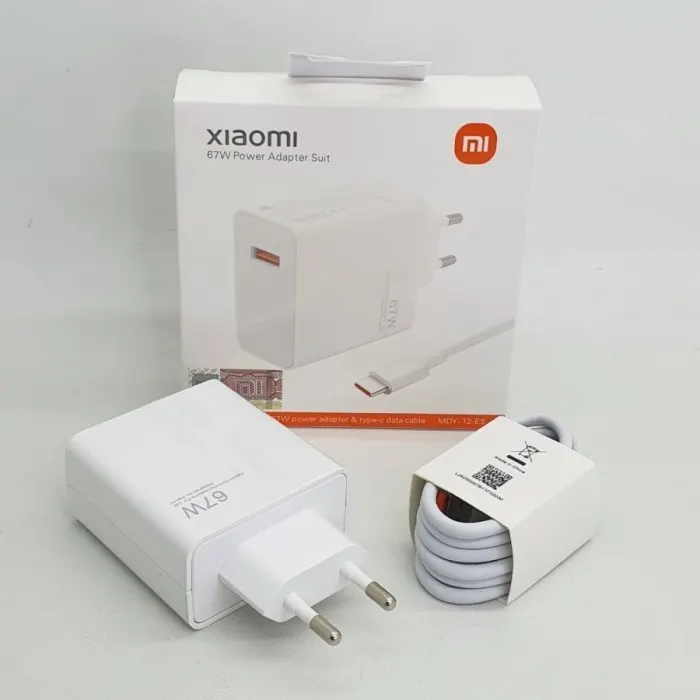
For Xiaomi/Redmi (33W, 67W, 120W): Buy official Xiaomi charger. Third-party chargers won't achieve full speed. Official 67W charger (1,500-2,000 BDT). Official 120W (3,000-4,000 BDT).
For OnePlus (65W, 80W, 100W): Buy official OnePlus Warp charger. OnePlus 65W (2,500-3,000 BDT). OnePlus 100W (3,500-4,500 BDT). Needs red USB-A to USB-C cable.
For Google Pixel (18W, 23W, 30W): Any USB PD charger works. Anker 30W GaN (1,500-2,000 BDT). UGREEN 30W GaN (1,200-1,500 BDT). Google original (2,000-2,500 BDT).
For multiple devices (phone + laptop + earbuds): Buy multi-port GaN charger 65W-100W. UGREEN 65W 2C1A (2,500-3,500 BDT). Baseus 65W 2C1A (2,500-3,000 BDT). Anker 67W (4,000-5,000 BDT). One charger for all devices.
================================================================================
PART 9: FREQUENTLY ASKED QUESTIONS
================================================================================
Question: Can I use 65W charger on 25W phone?
Answer: Yes, phone only draws 25W. Safe because phone negotiates power with charger. No damage.
Question: Why is my phone charging slowly?
Answer: Check: Using correct charger? Using correct cable? Cable damaged? Charging port clean? Phone not too hot? Background apps? Battery health good? Settings not limiting charge?
Question: Does wireless charging damage battery?
Answer: More heat than wired charging (10-20% more). Heat degrades battery faster. Use for convenience, not daily charging. For best battery health, use wired slow charging (18-25W).
Question: What is GaN charger? Is it better?
Answer: GaN (Gallium Nitride) chargers are smaller, more efficient, produce less heat than old silicon chargers. Same power in half the size. Recommended for travel. Slightly more expensive but worth it.
Question: Can I charge phone overnight with fast charger?
Answer: Yes, safe because phone stops charging at 100%. But keeping at 100% for hours degrades battery faster. Use Optimized Charging feature. Better to charge to 80% overnight.
Question: How to enable fast charging on my phone?
Answer: Usually enabled by default. Check Settings - Battery - Fast charging. Samsung: Settings - Battery - More battery settings - Fast charging. Xiaomi: Settings - Battery - Boost charging speed. OnePlus: Settings - Battery - Warp Charge.
================================================================================
FINAL VERDICT
================================================================================
Fast charging has become essential for modern smartphone use. For most users, 25W-45W charging is sufficient (0-100% in 45-75 minutes). For power users and gamers, 65W-100W is beneficial (0-100% in 25-35 minutes). For extreme users, 120W-150W is available (0-100% in 15-20 minutes).
Best universal charger: UGREEN 65W GaN (2,500-3,500 BDT) + 100W 5A USB-C cable (500-800 BDT). Works with Samsung, iPhone, Pixel, MacBook, iPad, and other USB PD devices.
Best value for Samsung users: Samsung 25W charger (1,000-1,500 BDT) + Samsung original cable.
Best for iPhone users: Anker Nano 30W (1,500-2,000 BDT) + Anker USB-C to USB-C cable.
Best for Xiaomi/OnePlus/Realme users: Buy official brand charger for full speed. Third-party chargers limited to 18-27W.
Remember: Cable matters as much as charger. Use original or certified cables. Avoid cheap 100 BDT cables. Check cable rating (3A vs 5A). For 100W charging, need 5A cable with E-marker chip.